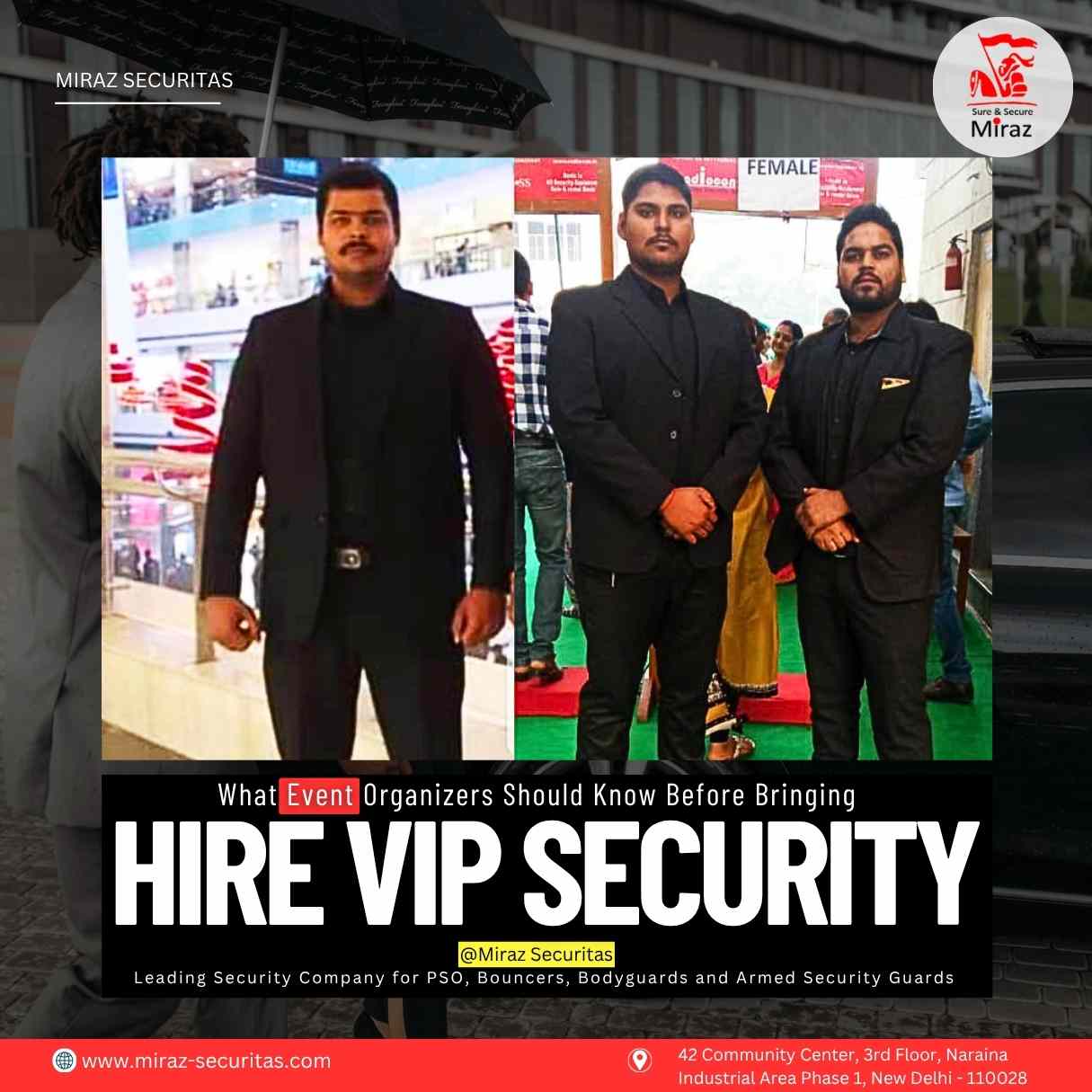
VIP Event Security: Direct Answer Summary
- Assess VIP security requirements, venue risks, and expected crowd behaviour before the event.
- Coordinate access control, arrival routes, and security responsibilities with event staff.
- Choose trained security personnel with clear communication and emergency response procedures.
An event may have a well-planned schedule, an impressive venue, and an exciting guest list, but the arrival of VIPs introduces additional security considerations. Public appearances, crowded entrances, media attention, and interactions with attendees can create challenges that require careful preparation.
For event organisers, VIP security is not simply about assigning guards to accompany a guest. It involves assessing potential risks, coordinating movements, protecting privacy, and ensuring that security arrangements support the event without unnecessarily disrupting it.
Professional VIP security helps organisers manage these responsibilities through advance planning, trained personnel, and coordinated operations, explains Miraz Securitas, an eminent security services provider offering PSO services in Delhi, Gurugram, and NOIDA.
Why Do Events Need Specialised VIP Security?
VIPs may attract considerable attention from attendees, media representatives, fans, or members of the public. This can create congestion around entrances, stages, green rooms, and designated seating areas. Without suitable arrangements, even routine activities such as arriving at the venue, moving between locations, or leaving after an event can become difficult to manage. Unauthorised access and unexpected interactions may also create security concerns.
Specialised VIP security helps manage these risks while maintaining an appropriate balance between protection, privacy, and the guest’s comfort.
“Effective VIP security begins long before the guest arrives. Careful planning and coordination help prevent avoidable risks while allowing the event to proceed smoothly,” opines Mr. Atul Mahajan, Director of Miraz Securitas a PSO and executive protection services agency to politician, VIP’s and business leaders in India.
What Should Organisers Assess Before the Event?
Organisers should begin by understanding the VIP’s role, public profile, schedule, and specific security requirements. They should also assess the venue layout, expected attendance, entry points, parking arrangements, restricted areas, and possible crowd congestion. The assessment should identify potential vulnerabilities around arrival and departure areas, backstage access, green rooms, and locations where guests may interact with the public. Security arrangements should reflect the actual risk assessment rather than follow a standard deployment for every event. Early planning gives organisers and security providers sufficient time to clarify responsibilities and prepare appropriate procedures.
How Should VIP Entry, Movement, and Exit Be Managed?
VIP movements require coordination between security personnel, event managers, venue staff, and transport teams. Organisers should establish suitable access arrangements, confirm authorised entry points, and ensure that designated routes remain clear. Arrival and departure procedures should account for crowd density, vehicle access, schedule changes, and the possibility of unexpected delays. Any alternative arrangements should be communicated only to the relevant personnel. Inside the venue, security teams may need to monitor access to backstage areas, private lounges, green rooms, and other restricted locations. Clear procedures help prevent unauthorised entry without causing unnecessary disruption to guests.

What Qualifications Should VIP Security Personnel Have?
Organisers should look for personnel with relevant training, professional conduct, situational awareness, and experience suited to the event’s requirements. Depending on the assignment, the role may require skills in crowd management, access control, conflict de-escalation, emergency procedures, and discreet close protection. Personnel should understand their individual responsibilities and know how to communicate concerns to supervisors. They must also maintain confidentiality when handling information about VIP schedules, movements, and personal arrangements. A professional appearance is useful, but it should not be the main selection criterion. Training, judgement, reliability, and the ability to work effectively as a team are equally important.
How Should VIP Security Coordinate with Event Management?
VIP security should operate as part of the wider event safety plan. Before the event, organisers should establish communication channels, reporting procedures, escalation protocols, and clear lines of responsibility. Security supervisors should coordinate with event management and relevant venue teams so that access restrictions, crowd control measures, and emergency arrangements remain consistent. Organisers should also brief relevant staff on their responsibilities. If a medical emergency, crowd disturbance, or other unexpected incident occurs, the response should follow established procedures and involve the appropriate emergency services when necessary.
How Can Organisers Choose the Right VIP Security Agency?
Organisers should evaluate the agency’s relevant experience, staff training, supervisory arrangements, risk assessment process, and ability to coordinate with event teams. They should clarify the number and roles of personnel required, the duration of deployment, communication arrangements, and contingency procedures. The agency should understand the specific event rather than recommend a generic security package. Organisers should also agree on reporting responsibilities, confidentiality expectations, and procedures for handling last-minute changes. A capable security partner helps implement the event’s safety arrangements, while the organiser remains responsible for ensuring that the venue and event operations are properly planned.
VIP security works best when it is considered during event planning rather than treated as a last-minute addition. Risk assessment, controlled access, coordinated movements, trained personnel, and clear communication all contribute to a more organised event. By choosing a suitable security provider and establishing responsibilities in advance, event organisers can protect VIP guests while helping the wider event run safely and professionally.

Under the successful leadership of Mr. Mahajan, Miraz Securitas Pvt Ltd today has achieved an over 100% growth rate within half a decade time. His vision for upgrading private security service has helped Miraz Securitas established a footprint PAN India. Today Miraz ,a trusted name has clients , across all market segments such as top universities, private & international schools, prestigious institutions of government of India, retail establishment, & more.
In the year 2017, Miraz Securitas won the prestigious ‘MSE 4’ ratings by global rating & research organization – CRISIL & India’s Public Sector unit NSIC for accomplishing high-performance capability & above-average creditworthiness among other Indian companies.
- What Event Organizers Should Know Before Bringing in VIP Security - October 20, 2026
- How Trained Security Personnel Help Hospitals Stay Safe During Peak Hours - October 18, 2026
- Your Festival Looks Ready—But Is the Crowd Actually Safe? - October 18, 2026