VIP Event Security: Direct Answer Summary
- Assess VIP security requirements, venue risks, and expected crowd behaviour before the event.
- Use observation, risk assessment, and discreet communication to prevent incidents.
- Coordinate transport, access control, and emergency response procedures.
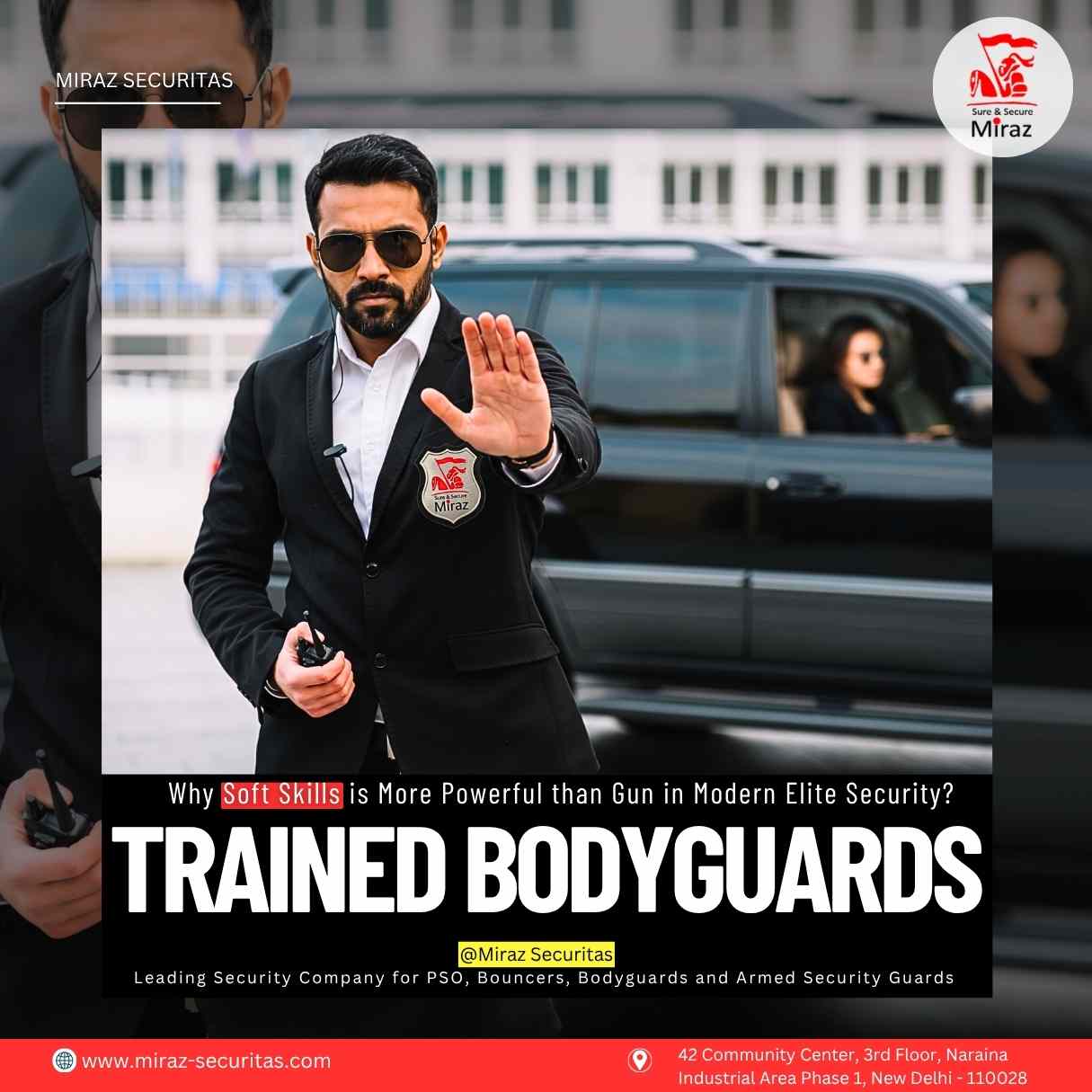
Professional close protection involves far more than accompanying a client or maintaining a visible security presence. Behind every carefully managed movement are decisions involving observation, planning, communication, and risk assessment. Close protection professionals must anticipate potential threats, adapt to changing circumstances, and maintain discretion while allowing clients to continue their daily activities. Their effectiveness often depends on skills that remain unnoticed because successful protection frequently means preventing a situation from escalating.
Professional close protection requires trained personnel who can combine vigilance, sound judgment, and disciplined planning, explains Miraz Securitas, a security services company providing PSO and executive protection services in Delhi, Gurugram, and NOIDA.

What Are the Most Important Skills Behind Professional Close Protection?
Situational awareness is one of the most important skills in close protection. Personnel must observe their surroundings, recognize unusual behaviour, identify potential vulnerabilities, and understand how environmental changes may affect a client’s safety. Risk assessment is equally important. This involves evaluating locations, travel routes, schedules, and planned engagements to identify possible concerns before they become immediate threats. Professional judgment also matters. Close protection personnel must distinguish between routine activity and genuine warning signs, make proportionate decisions, and avoid creating unnecessary alarm.
“Effective close protection is not about being noticed everywhere; it is about recognising risks early and making the right decisions before they become incidents,” opines Mr. Atul Mahajan, Director of Miraz Securitas a PSO and Executive Protection Services agency to politicians and business leaders in India.
How Does Observation Help Prevent Potential Threats?
Observation involves more than simply watching people nearby. Close protection professionals must remain attentive to changes in their surroundings, unexpected movements, access points, and circumstances that could affect a client’s security. They also need to recognise patterns and identify inconsistencies without making assumptions based on appearance alone. This requires concentration, emotional control, and the ability to process information while remaining composed. Discreet observation helps personnel identify concerns early and communicate relevant information to the team. This proactive approach can reduce the likelihood of being forced into a rushed response.
Why Are Communication and Teamwork Essential in Close Protection?
Close protection often involves coordination between security personnel, drivers, venue representatives, and other relevant staff. Clear communication helps everyone understand their responsibilities, share important updates, and respond consistently when circumstances change. Team members must communicate concisely, follow established procedures, and know when to escalate a concern. Misunderstandings or delayed information can create avoidable vulnerabilities. Professionalism also requires discretion. Personnel may work around confidential schedules, personal information, and sensitive business matters. Respecting privacy and maintaining confidentiality are therefore essential parts of the role.

How Important Are Planning and Route Assessment?
Effective protection begins before a client leaves a residence, office, hotel, or event venue. Personnel may need to review the itinerary, assess access arrangements, consider transport requirements, and identify suitable alternatives if plans change. Route assessment helps teams understand possible delays, congestion, access restrictions, and other factors that could affect movement. Plans should remain flexible enough to accommodate changing conditions without compromising the client’s schedule unnecessarily. Advance preparation reduces uncertainty and allows personnel to make informed decisions rather than relying entirely on improvisation.
How Do Close Protection Professionals Handle Pressure and Emergencies?
Close protection personnel may face sudden changes, unexpected confrontations, medical incidents, or other stressful situations. Remaining calm is essential because panic can impair judgment and affect the wider team’s response. Training helps personnel follow established procedures, communicate clearly, assess immediate risks, and coordinate with emergency services when necessary. They must also understand the limits of their responsibilities and seek appropriate assistance when an incident requires specialist support. Physical fitness can support the role, but emotional control, situational awareness, and sound decision-making are equally important to professional performance.
Why Are Discretion and Professional Conduct Often Overlooked?
Close protection professionals work in close proximity to clients and may accompany them during business meetings, public appearances, travel, and private engagements. Their conduct must reflect reliability, respect, and an understanding of professional boundaries. Discretion means protecting confidential information, avoiding unnecessary attention, and behaving appropriately in different environments. Personnel must also remain courteous while enforcing access restrictions or responding to difficult behaviour. These qualities help build trust and allow security arrangements to operate without unnecessarily disrupting the client’s daily activities.
How Can Organisations Choose a Professional Close Protection Provider?
Organisations should evaluate a provider’s personnel training, operational experience, risk assessment procedures, supervision, and emergency preparedness. They should also establish clear expectations regarding confidentiality, communication, reporting, and coordination with the client or management team.
A suitable provider should assess the client’s actual requirements rather than rely on a standard deployment for every assignment. The level of protection should reflect the assessed risks, working environment, travel arrangements, and nature of the engagement. Professional close protection is most effective when trained personnel, careful planning, and clear responsibilities work together.
Professional close protection depends on much more than a visible security presence. Observation, planning, communication, discretion, and calm decision-making form the foundation of effective protection. When these skills are supported by appropriate training and coordinated procedures, security professionals can identify potential concerns early and respond more effectively to changing circumstances. The most valuable work often happens before a threat becomes visible.

Under the successful leadership of Mr. Mahajan, Miraz Securitas Pvt Ltd today has achieved an over 100% growth rate within half a decade time. His vision for upgrading private security service has helped Miraz Securitas established a footprint PAN India. Today Miraz ,a trusted name has clients , across all market segments such as top universities, private & international schools, prestigious institutions of government of India, retail establishment, & more.
In the year 2017, Miraz Securitas won the prestigious ‘MSE 4’ ratings by global rating & research organization – CRISIL & India’s Public Sector unit NSIC for accomplishing high-performance capability & above-average creditworthiness among other Indian companies.
- How Schools Should Prepare Security Teams for an Unidentified Threat - October 26, 2026
- Why Soft Skills is More Powerful than Gun in Modern Elite Security? - October 21, 2026
- What Event Organizers Should Know Before Bringing in VIP Security - October 20, 2026