Hospital Security: Direct Answer Summary
- Trained guards manage access, queues, and crowded hospital areas
- Emergency training helps security teams respond to incidents and keep routes clear.
- Regular training and coordination support safer hospital operations during peak hours.
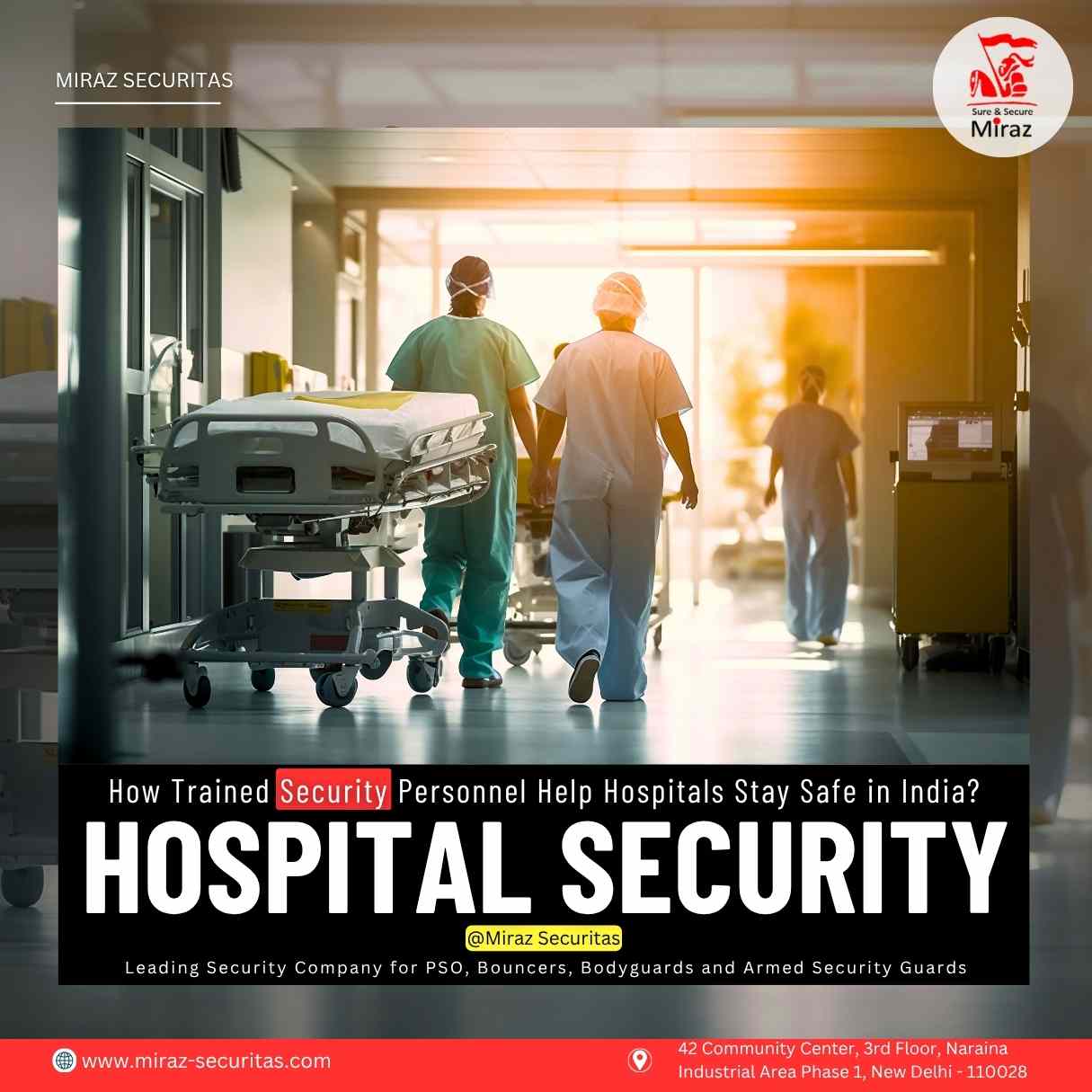
Hospitals experience heavy footfall during outpatient consultations, visiting hours, emergency admissions, and shift changes. During these busy periods, crowded entrances, long queues, and multiple people moving through the premises can create security challenges. Patients, visitors, doctors, nurses, and administrative staff all need a safe environment in which medical care can continue without unnecessary disruption.
Trained security personnel help hospitals manage these challenges by controlling access, guiding visitors, monitoring sensitive areas, and responding to incidents. Their role extends beyond guarding entrances; they support the hospital’s overall safety and help maintain order when patient movement and visitor traffic increase shares, Miraz Securitas, India’s most trusted Security Guard Agency for Corporate and Private Hospitals, Nursing homes, and medical healthcare centres in Delhi, Gurugram and NOIDA.
Why Do Hospitals Face Greater Security Challenges During Peak Hours?
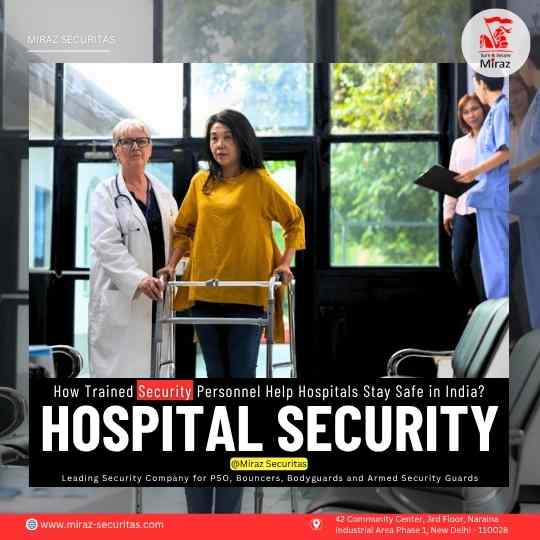
Peak hours bring together patients with different medical needs, accompanying family members, hospital employees, delivery personnel, and service providers. Emergency departments may experience particularly high pressure, while outpatient areas can become crowded around registration counters, waiting rooms, and consultation chambers.
These conditions can make it difficult to identify unauthorised visitors, manage queues, and keep emergency routes clear. Disagreements over waiting times, restricted access, or hospital procedures may also escalate if not handled promptly. Trained security personnel help reduce these risks by following established procedures, communicating clearly, and coordinating with hospital staff.
“Hospital security is not simply about controlling entry. It is about protecting people, maintaining order, and helping healthcare teams deliver care safely, even during the busiest hours.” Says Mr. Atul Mahajan, Director of Miraz Securitas.
How Does Access Control Help Keep Hospitals Secure?
Controlling entry is one of the most important responsibilities of hospital security teams. During peak hours, security personnel can monitor entrances, verify visitor permissions where required, and direct people to the appropriate departments. They may also enforce visitor timings, manage entry into restricted clinical areas, and prevent unauthorised access to locations such as intensive care units, operating theatres, pharmacies, and staff-only zones. Effective access control should not obstruct emergency treatment. Security personnel must understand hospital protocols so that patients requiring urgent medical attention can reach the appropriate team without unnecessary delays.
How Do Security Guards Manage Crowds and Queues?
Crowding can cause confusion, block corridors, and make it difficult for patients to move safely. Trained guards help organise queues near registration desks, billing counters, pharmacies, lifts, and outpatient departments. They can guide visitors towards designated waiting areas, prevent unnecessary congestion, and keep passageways accessible for wheelchairs, stretchers, and emergency teams.
Professional communication is essential. Security personnel should provide clear directions, remain calm when people are frustrated, and avoid confrontational behaviour. When a dispute develops, they can follow escalation procedures and seek assistance from supervisors or hospital administrators.
How Can Security Personnel Support Emergency Response?
Hospitals must remain prepared for medical emergencies, fire alarms, security incidents, and sudden crowd surges. Security personnel can support these situations by alerting the appropriate response teams, keeping access routes clear, and helping direct people away from hazardous areas. During an emergency, guards may assist with crowd control, guide emergency vehicles to designated entrances, and help prevent unauthorised individuals from entering affected areas. Their responsibilities should follow the hospital’s emergency response plan. Regular drills and training in emergency communication, evacuation procedures, and incident reporting help personnel respond more effectively under pressure.
How Does Security Protect Patients, Staff, and Hospital Property?
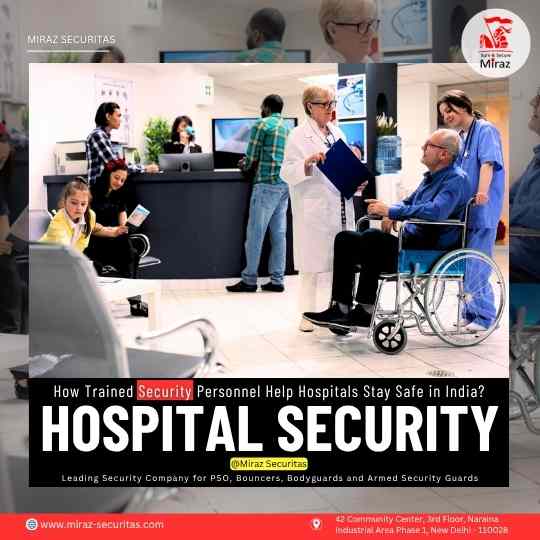
Hospitals contain medicines, medical equipment, confidential records, and valuable personal belongings. Unauthorised access, theft, aggressive behaviour, and disputes can affect both safety and hospital operations. Security teams help deter such incidents through patrols, observation, access checks, and coordination with hospital management. They may also monitor designated surveillance systems where authorised and report suspicious activity according to established procedures. Their presence can reassure patients and employees, particularly in crowded waiting areas and during late shifts. However, security personnel should respect patient privacy, maintain confidentiality, and handle sensitive situations discreetly.
Why Is Specialised Hospital Security Training Important?
Hospital security differs from security at many commercial premises because staff regularly encounter vulnerable patients, distressed relatives, medical emergencies, and sensitive clinical environments. Personnel need training in communication, conflict de-escalation, access control, emergency procedures, fire safety, and incident reporting. They should understand when to intervene, when to seek help, and how to coordinate with medical teams without interfering with treatment. Training should also cover professional conduct, cultural sensitivity, patient dignity, and the appropriate handling of confidential information. Clearly defined responsibilities and regular refresher sessions help maintain consistent standards.
How Can Hospitals Improve Security During Peak Hours?
Hospitals can strengthen security by identifying their busiest periods and allocating personnel accordingly. Entrances, emergency departments, registration areas, lifts, and restricted zones may require different levels of attention depending on footfall and risk. Management should establish clear procedures for visitor verification, crowd management, incident escalation, and emergency response. Coordination between security supervisors, reception teams, nursing staff, and hospital administrators is equally important.
Periodic security assessments can help identify gaps, improve staff deployment, and ensure that procedures remain appropriate as hospital operations change. Trained security personnel play an important role in keeping hospitals organised and secure during peak hours. Through access control, crowd management, emergency coordination, and professional communication, they help reduce disruption and support the safety of patients, visitors, and healthcare workers.
Effective hospital security depends on more than the number of guards on duty. Appropriate training, clear protocols, coordinated teamwork, and risk-based deployment help hospitals maintain a safer environment while ensuring that patient care remains the priority.

Under the successful leadership of Mr. Mahajan, Miraz Securitas Pvt Ltd today has achieved an over 100% growth rate within half a decade time. His vision for upgrading private security service has helped Miraz Securitas established a footprint PAN India. Today Miraz ,a trusted name has clients , across all market segments such as top universities, private & international schools, prestigious institutions of government of India, retail establishment, & more.
In the year 2017, Miraz Securitas won the prestigious ‘MSE 4’ ratings by global rating & research organization – CRISIL & India’s Public Sector unit NSIC for accomplishing high-performance capability & above-average creditworthiness among other Indian companies.
- What Event Organizers Should Know Before Bringing in VIP Security - October 20, 2026
- How Trained Security Personnel Help Hospitals Stay Safe During Peak Hours - October 18, 2026
- Your Festival Looks Ready—But Is the Crowd Actually Safe? - October 18, 2026