Summary
- Environment defines strategy: Celebrity protection operates in high-visibility, crowd-heavy public settings, while corporate protection focuses on controlled, private, and professionally regulated environments.
- Threat nature shapes response: Celebrities face emotional, spontaneous risks requiring rapid physical intervention; executives face strategic, targeted threats demanding intelligence-led prevention and layered security.
- Protection style differs: Celebrity security is visible and deterrent-focused, whereas corporate protection is discreet, procedural, and integrated with organizational risk and data security systems.
Personal protection is a specialized discipline shaped by risk, environment, and public exposure. Although celebrity bodyguards and corporate executive protection teams share the same ultimate objective—keeping their clients safe—their strategies differ significantly. The contrast emerges from how visible their clients are, the types of threats they face, and the professional settings in which they operate. A movie star surrounded by fans at a public event requires a very different security approach than a corporate leader navigating high-level negotiations behind closed doors as shared by Miraz Securitas bodyguard services agency in Delhi, Gurugram and NOIDA for celebrities and corporate leaders.
What Makes Celebrity Protection Different From Corporate Executive Security?
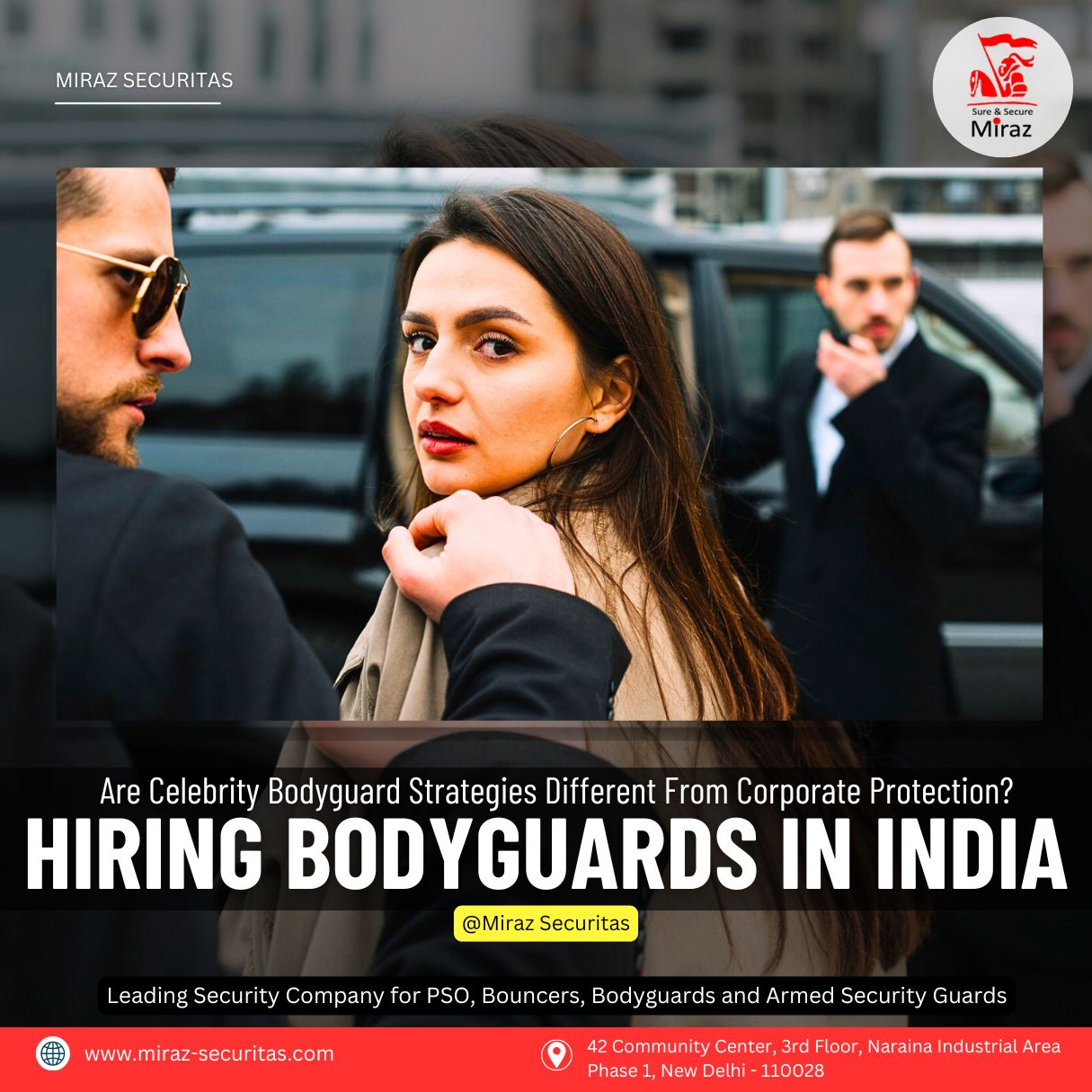
The most fundamental difference lies in exposure. Celebrities operate in public-facing spaces where visibility is unavoidable and often intentional. Red carpets, concerts, promotional events, and social appearances attract large crowds and intense media attention. These environments are fluid and emotionally charged, requiring protection teams to think in real time. Managing fan surges, navigating aggressive photography, and ensuring safe movement through dense gatherings become daily responsibilities. The bodyguard’s presence is often obvious, acting as both a shield and a visual deterrent.
Mr. Atul Mahajan, Director of Miraz Securitas says that, “An effective protection is never one-dimensional—it evolves with the client’s world. Where celebrities need visible shields in unpredictable public spaces, corporate leaders rely on discreet, intelligence-driven safeguards behind the scenes; true security succeeds when strategy aligns precisely with exposure, environment, and the nature of risk.”
Public Visibility Demands Different Protection Approaches
Celebrities exist in a world of constant public attention. Film premieres, concerts, award ceremonies, brand promotions, and social appearances place them in highly crowded and emotionally charged environments. Protection teams must manage unpredictable human behavior, sudden crowd movement, and intense media presence.
Security here is highly dynamic. Bodyguards form protective perimeters, guide movement through dense gatherings, and maintain physical shielding when necessary. Their presence is often intentionally visible because deterrence plays an important role. A strong, alert security detail can prevent incidents before they escalate.
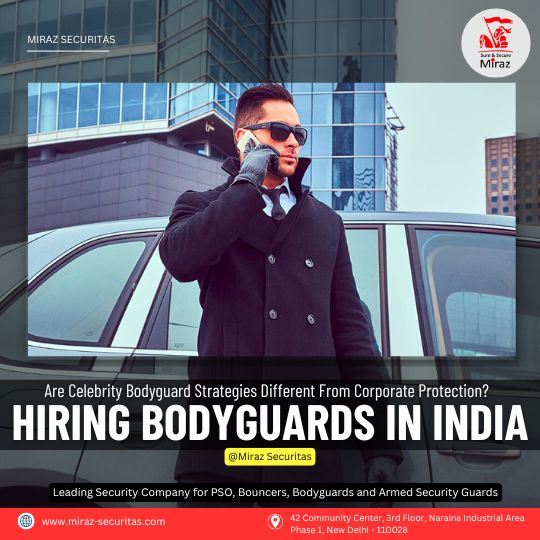
Corporate executives, by contrast, usually operate in structured and controlled spaces such as offices, conference venues, government buildings, and private meetings. Public interaction is limited and regulated. Protection strategies focus less on crowd navigation and more on controlled access, visitor screening, and secure workspace management. The objective is to maintain safety without disrupting professional operations.

Threat Profiles Shape Tactical Planning
Celebrity protection deals largely with emotional and unpredictable risks. Overenthusiastic fans, stalkers, paparazzi pressure, and spontaneous public disturbances are common concerns. These scenarios demand immediate response capability and strong situational awareness. Security personnel must read crowd behavior, anticipate sudden movements, and act quickly to prevent physical breaches.
Corporate protection involves more calculated and targeted threats. Executives often make decisions that influence markets, policies, and industries, which can attract strategic risks. Concerns may include corporate espionage, coercion attempts, activist interference, and organized criminal targeting.
As a result, planning becomes intelligence-driven. Advance reconnaissance, threat assessment, secure route design, and coordination with cybersecurity teams are essential. The focus shifts from reacting to visible disruptions toward preventing sophisticated risks before they materialize.
Operational Style Reflects Client Environment
Celebrity security is outward-facing and interactive. Teams frequently engage with event staff, media coordinators, venue managers, and sometimes even fans. Movement management is continuous, and physical positioning is critical. Guards often work in tight formations, maintaining a protective bubble while allowing the celebrity to remain accessible to audiences.
Corporate executive protection is more discreet and procedural. Security personnel typically operate in plain clothes and maintain a low profile. They integrate with corporate risk management systems and coordinate closely with administrative staff. The aim is seamless protection that does not draw attention or interfere with business engagements.
Travel and Scheduling Require Different Security Models
Celebrity schedules are often publicized through promotions and media announcements. This visibility increases exposure and makes movement patterns easier to anticipate. Protection teams must remain flexible, prepare alternate routes, and adapt quickly to last-minute schedule changes or crowd surges.
Corporate travel is usually confidential and carefully structured. Itineraries are shared on a need-to-know basis, transportation plans are vetted for safety, and accommodations are selected with risk mitigation in mind. Contingency planning plays a central role, ensuring continuity even if disruptions occur.
Technology Integration Serves Different Priorities
Both domains rely heavily on modern security tools, but their priorities differ. Celebrity protection emphasizes real-time communication systems, surveillance coordination, and rapid response logistics to manage live public situations.
Corporate protection integrates physical security with digital safeguards. Secure communication channels, cybersecurity coordination, access control systems, and intelligence monitoring are critical components. Protection extends beyond the individual to include sensitive data, proprietary information, and organizational assets.
Comparison: Celebrity vs Corporate Bodyguard
Aspect | Celebrity Protection | Corporate Protection |
Primary Environment | Public events and crowded venues | Offices, meetings, controlled facilities |
Security Presence | Visible and deterrent-focused | Discreet and low-profile |
Nature of Threats | Emotional, spontaneous, public-facing | Strategic, targeted, intelligence-driven |
Planning Approach | Flexible, real-time adjustments | Structured, preventive risk management |
Travel Style | Public schedules, dynamic routing | Confidential itineraries, secure logistics |
Protection Scope | Individual physical safety | Individual safety plus data and asset security |
Celebrity bodyguard services and corporate executive protection operate under the same professional principles but apply them in distinct ways. Public intensity versus private influence, emotional unpredictability versus strategic targeting, and visible deterrence versus discreet prevention all shape how protection is delivered. Effective security is not defined by prominence but by understanding the unique risk ecosystem surrounding each client.

Under the successful leadership of Mr. Mahajan, Miraz Securitas Pvt Ltd today has achieved an over 100% growth rate within half a decade time. His vision for upgrading private security service has helped Miraz Securitas established a footprint PAN India. Today Miraz ,a trusted name has clients , across all market segments such as top universities, private & international schools, prestigious institutions of government of India, retail establishment, & more.
In the year 2017, Miraz Securitas won the prestigious ‘MSE 4’ ratings by global rating & research organization – CRISIL & India’s Public Sector unit NSIC for accomplishing high-performance capability & above-average creditworthiness among other Indian companies.
- What Makes a Bank Security Guard Different from Regular Guards - May 21, 2026
- What Skills Make a Good Retail Security Guard - May 15, 2026
- Is Your Event Safe—or Just Well-Attended? - May 10, 2026